

The number one question we get from property owners thinking about seller financing is some version of this: "What if the buyer stops paying?"
It's a fair question. When you offer owner financing, you're the bank. And nobody wants to hand over their property and then chase a buyer for payments.
The good news is that you have real protections as long as your deal is set up correctly. In this guide, we'll walk you through what happens when a buyer defaults, the options you have, and the steps you can take before closing to lower your risk.
Want a seller-financed buyer you don't have to worry about?
We buy properties in any condition and pay every month.
What Counts as a Default on Seller Financing?
A default is when the buyer breaks the terms of the promissory note or agreement. The most common reason is missed payments, but a default can also include:
- Not paying property taxes
- Letting the homeowner's insurance lapse
- Not paying off a balloon payment when it's due
- Selling or transferring the property without your approval (if your note has a due-on-sale clause)
Your agreement and promissory note spell out what counts as a default. That's why it matters so much.
What Happens Step-by-Step When a Buyer Stops Paying
Every state has its own rules and timelines, but the general process usually looks like this:
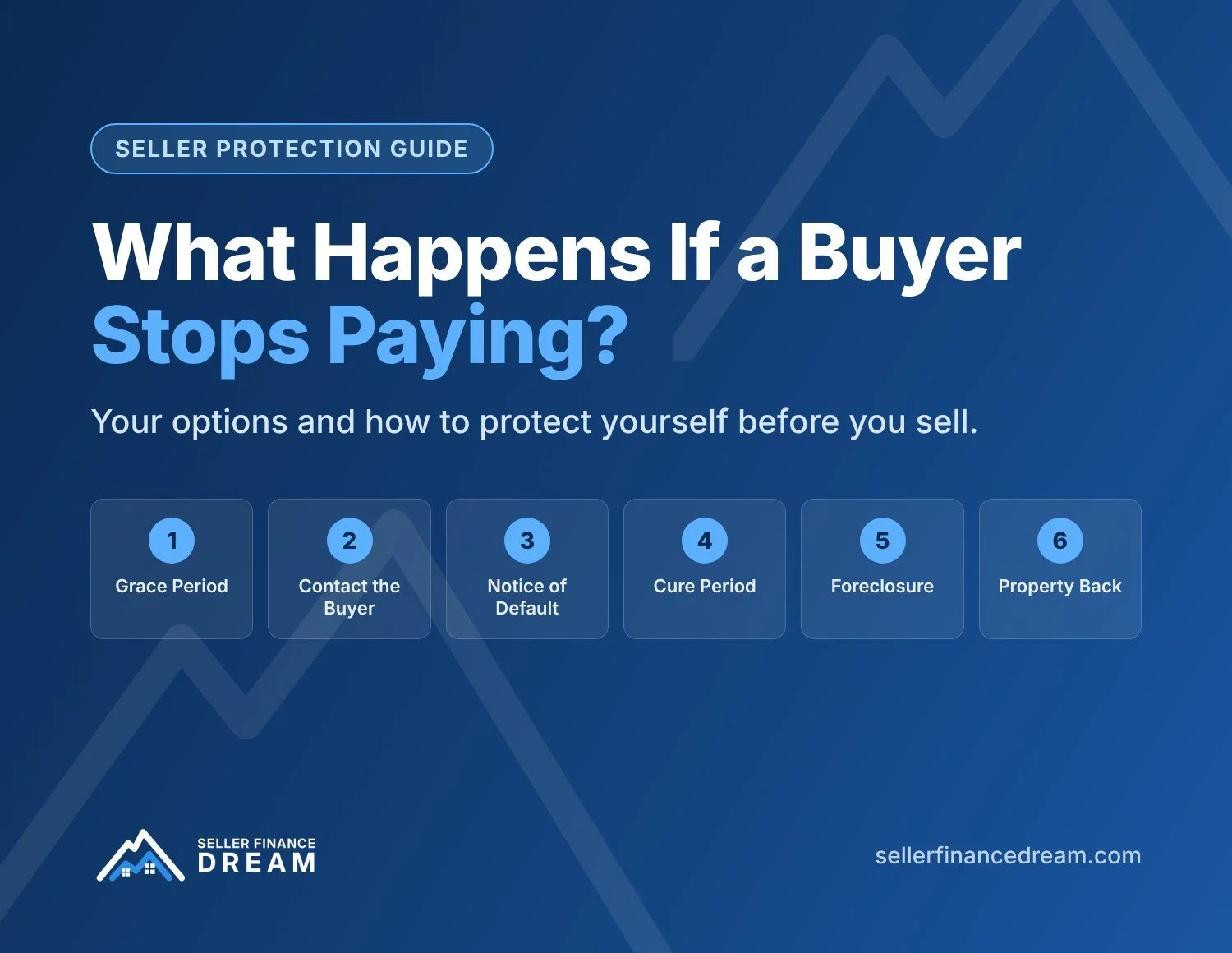
1) Grace Period
Most notes include a grace period, often 15 to 30 days, before a payment is officially late. After that, a late fee typically kicks in.
2) Contact the Buyer
Before anything formal, reach out. Life happens: a job loss, a medical bill, a late paycheck. A quick call can often fix the problem before it grows.
3) Notice of Default
If the payment still isn't made, you (or your loan servicer or attorney) send a formal notice of default. It tells the buyer what they owe and how long they have to fix it.
4) Cure Period
The buyer gets time to "cure" the default by catching up. This is often 30 to 90 days, depending on your state and your documents.
5) Foreclosure
If the buyer doesn't catch up, you can start foreclosure. In many states, a deed of trust allows a non-judicial foreclosure, which is usually faster and less expensive. Other states require a judicial foreclosure through the courts. Depending on the state, the process can take a few months to over a year.
6) You Get the Property Back
Once foreclosure is complete, ownership comes back to you. You keep the down payment and every monthly payment the buyer made. From there, you can sell it again, with or without owner financing.
Just remember that this is a last resort and your goal when offering seller financing is to find a trusted buyer in hopes of reducing this risk.
Your Options Besides Foreclosure
Foreclosure is your safety net, but it's not always your first or best move. Other options might include:
Payment Plan
Let the buyer catch up over a few months by adding a bit to each payment.
Loan Modification
Adjust the terms, like extending the loan or temporarily lowering the payment to keep the buyer on track. Put any changes in writing.
Deed in Lieu of Foreclosure
The buyer voluntarily signs the property back over to you. This can save both of you time and legal fees. Have an attorney handle it so you take the property back with a clean title.
Sell the Note
If you don't want to deal with a struggling buyer, some note buyers will purchase your note usually at a discount. Just make sure that is allowed under your agreement with the buyer.
How to Protect Yourself Before You Sell
The best way to handle a default is to make it less likely to happen in the first place.
Vet Your Buyer
Check income, credit, and experience. If it's an investor, ask about their track record and funds. Make sure the payment makes sense for the property. For example, we look at local rental rates to confirm the payment is affordable long term so that they can manage it during market swings.
Get a Down Payment
A down payment gives the buyer something to lose if they walk away and it gives you a bigger cushion. Learn more in Understanding the Seller Financing Interest Rate and Down Payment.
Don't Overcharge on Interest
It's tempting to charge a high rate, but a payment that's too high is one of the fastest ways to cause a default. If a buyer couldn't afford the bank's rate they likely can't afford a much higher one either.
Use the Correct Documents
Use a promissory note with clear late fees and default terms, and work with a reputable escrow and title company to record a deed of trust or mortgage with the county. Our Owner Finance Contract Templates are a good starting point, but always have a real estate attorney review your documents.
- Proven Owner Financing Contract – A ready-to-use Purchase & Sale Agreement (PSA) with Owner Financing Addendum.
- Sell Property with Confidence – Remove the guesswork when selling with our owner financing forms and contract package.
- Get Here
Require Proof of Taxes and Insurance
Ask to be listed on the buyer's insurance policy and require proof that property taxes are paid each year. Some sellers collect taxes and insurance monthly through an escrow account.
Use a Loan Servicing Company
A servicer collects payments, tracks late payments, and sends notices for you. It keeps things professional and you'll have clean records if you ever need to enforce the note.
Most Common Questions About Seller Financing Defaults
Here are some of the most common questions about seller financing defaults.
Do I keep the down payment if the buyer defaults?
In most cases, yes. You keep the down payment and the monthly payments the buyer made before the default.
How long does it take to foreclose on seller financing?
It depends on your state and whether the foreclosure is judicial or non-judicial. It can range from a few months to over a year.
Can I just change the locks if the buyer stops paying?
No. Once the deed has transferred the buyer is the legal owner. You need to follow your state's legal process to take the property back.
Is seller financing riskier than a bank loan?
The risk is different. You're relying on one buyer's payments and a home you take back could come back in worse shape. But with good vetting and strong documents many sellers use owner financing successfully for years.
What happens if the property is in bad shape when I get it back?
You may need to make repairs before reselling. That's another reason a down payment and insurance requirements might matter.
Seller Financing Offer & Tools
If the idea of vetting buyers and handling a possible default makes you nervous, we can make you an offer directly. We buy properties with seller financing and pay every month, so you get the income without worrying about a stranger's credit.
Get a no-obligation seller-financed offer on your property.
Prefer to do it yourself? Model your deal with the free Seller Finance Calculator.

- Owner Financing Made Simple – Attach this owner financing addendum to any PSA to define clear seller financing terms.
- Flexible & Easy to Use – Designed for any seller-financed deal to structure terms with confidence as the property seller.
- Get Here
- Analyze Owner Finance Sales – Analyze your owner financing income potential and identify sale terms for your property.
- Advanced Owner Financing Calculator – Evaluate interest rates, amortization schedules, and balloon payments in one tool.
- Get Here
Additional Seller Financing Resources You'll Love
- How to Sell a House with Owner Financing: Step-by-Step Guide for Sellers
- What is Seller Financing?
- Why You Should Sell a Property with Seller Financing
Disclaimer: We are not legal professionals, and this article is not legal advice. Default and foreclosure laws vary by state, so please talk with a qualified real estate attorney before taking action.